Cross-cultural dating
Who is setting the tone of a relationship…
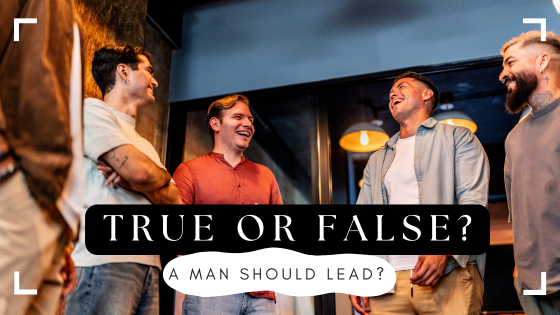
There’s a moment in almost every early-stage connection where the question quietly appears: Who is setting the tone here? Not in an obvious, spoken way, but in the rhythm of messages, in who suggests the next meeting, in how decisions are made or avoided. And somewhere behind that question sits a more loaded one: Should a man lead?
It’s a statement that feels both outdated and strangely persistent at the same time. On one side, modern dating culture –especially shaped by feminist perspectives – pushes toward equality, autonomy, and shared responsibility. On the other, there is still a deeply ingrained expectation, across many cultures, that a man defines the pace, the direction, even the outcome of a connection.
So which one is it? The truth is, this isn’t a clean yes or no.
Because while the idea of “a man should lead” can easily slip into outdated, rigid roles or even unhealthy power dynamics, there is also a psychological and relational layer where direction, decisiveness, and clarity – often expected from men –create safety and movement in the early stages of a connection.
The cultural perspective
In some cultures, a man taking initiative – planning, suggesting, following through – is seen as basic interest and respect. In others, the same behavior can feel overwhelming, even intrusive. At the same time, many women today are used to independence, making their own decisions, building their own lives, and yet, in dating, they often still look for a sense of grounded direction from the other side. Not because they can’t lead. But because they don’t want to carry everything. And this is where confusion begins.
Because if both sides hold back – trying to be respectful, modern, non-pushy – the connection often loses momentum. It stays polite, undefined, and slowly fades. If one side pushes too hard, it can feel like pressure or control. And if one side waits for the other to define everything, it creates an imbalance.
So instead of asking “Should a man lead?” in a rigid sense, a more useful question might be: Who is willing to take responsibility for direction, and how is that communicated? Still, there is a reason this idea hasn’t disappeared. In many real-life interactions, men do end up setting the tone – whether consciously or not. And not because they are “supposed to,” but because direction reduces ambiguity, and ambiguity is where most early connections fail. If we look at it more practically, there are patterns that appear again and again:
- A man who initiates clearly: suggests a time, a place, follows through >>> creates momentum.
- A man who is uncertain: texts inconsistently, avoids defining plans >>> creates confusion.
- A man who is too forceful: pushes for rapid progression or ignores signals >>> creates pressure.
None of these are about gender roles alone.
They are about how direction is expressed.
But if we stay with the original statement— a man should lead — there are still arguments for why, in many dynamics, men often end up setting the tone of an interaction:
- First, because early-stage dating often relies on visible interest. Clear initiation—asking, planning, following up—removes guesswork and signals intention.
- Second, because many women, even highly independent ones, experience direction as emotional safety. Not control, but a sense that someone is willing to move things forward.
- Third, because indecisiveness tends to stall connections quickly. When both parties hesitate, the interaction remains neutral—and neutrality rarely builds attraction.
- Fourth, because cultural expectations still shape perception. In many contexts, a lack of initiative from a man is interpreted as lack of interest, regardless of his internal state.
- Fifth, because leadership in this sense is less about power and more about responsibility. Someone needs to create movement, and often, men are socially conditioned to take that role.
- Sixth, because clarity reduces overthinking. When direction is present, both sides can relax into the experience rather than constantly evaluating it.
- And seventh, because without a sense of rhythm; who reaches out, how often, what the next step is connections drift into inconsistency, which slowly erodes interest on both sides.
But this is only one side of the equation. Because what happens when the man is uncertain? Then the entire dynamic reflects that uncertainty. Plans remain vague. Communication becomes inconsistent. The connection feels like it’s “almost something,” but never quite lands anywhere. And often, the other person starts compensating, initiating more, clarifying more, trying to stabilize something that was never clearly grounded.
And what happens when the man is too pushy?
Then direction turns into pressure. The rhythm becomes too fast, too defined, too demanding, and instead of safety, it creates resistance. Especially in cross-cultural settings, where boundaries and pacing can differ significantly, this can quickly lead to disconnection.
Which brings us back to what actually matters more than who leads: communication – external and internal. Because before you can communicate with someone else, you need to be clear with yourself.
- What do you actually want right now?
- What can you realistically give?
- What pace feels natural to you?
- What are you expecting -without having said it out loud?
These answers are not fixed. They shift with your life, your capacity, your emotional state. One week, you might be open, present, engaged. Another week, you might need space, quiet, distance.
That’s why consistency isn’t about behaving the same way all the time. It’s about staying communicative as things change. And this applies to both sides. Because even if one person initiates or sets direction, a connection only becomes real when both people take responsibility for expressing their needs, boundaries, and expectations.
So—true or false? A man should lead. The more honest answer might be that sometimes, yes, in the sense of bringing direction and clarity, but not alone, and not without awareness, because leadership without communication becomes control. And equality without direction becomes stagnation. The real question isn’t who leads.
It’s whether both people are willing to move and to say where they are while doing it.
 English
  Korean